How to Thrive During Extended TDY While Keeping Your Home Life Intact
Extended TDY assignments have gotten complicated with all the separation challenges flying around. As someone who has done multiple 90+ day TDYs and talked to hundreds of service members about what actually works, I learned everything there is to know about surviving months away from home. Today, I will share it all with you.

Preparing Your Family Before You Leave
Extended TDY success begins before you pack your bags. Sit down with your spouse or partner to discuss logistics, expectations, and communication plans. Establish who handles which responsibilities while you’re gone. Write down important contacts, account information, and emergency procedures.
Prepare your kids in age-appropriate ways. Younger children benefit from calendars counting down to your return – something visual they can track. Older kids need honest conversations about why you’re leaving and when you’ll be back. All ages need reassurance that this is temporary.
Set up finances to function without you. Make sure your partner has access to all accounts and understands recurring bills. Leave emergency funds accessible. Set up automatic payments to reduce administrative burden. That’s what makes good preparation endearing to us military families – it prevents crises before they happen.
Creating Structure in Your Temporary Life
Extended TDY without routine leads to unhealthy patterns and declining morale. I’ve seen it happen to good people. Establish daily structure that mirrors your home life as much as possible. Wake at consistent times. Maintain exercise schedules. Create evening rituals that provide closure to each day.
Transform your temporary quarters into livable space. Bring photos, favorite pillows, or small comfort items from home. Stock your room with healthy snacks and personal care items. These touches seem minor but significantly impact psychological well-being over multi-month stays.

Find your essential services early. Locate the gym, grocery store, laundromat, and any specialty services you need. Knowing where to get haircuts, car maintenance, or medical care reduces stress when needs arise.
Communication That Strengthens Relationships
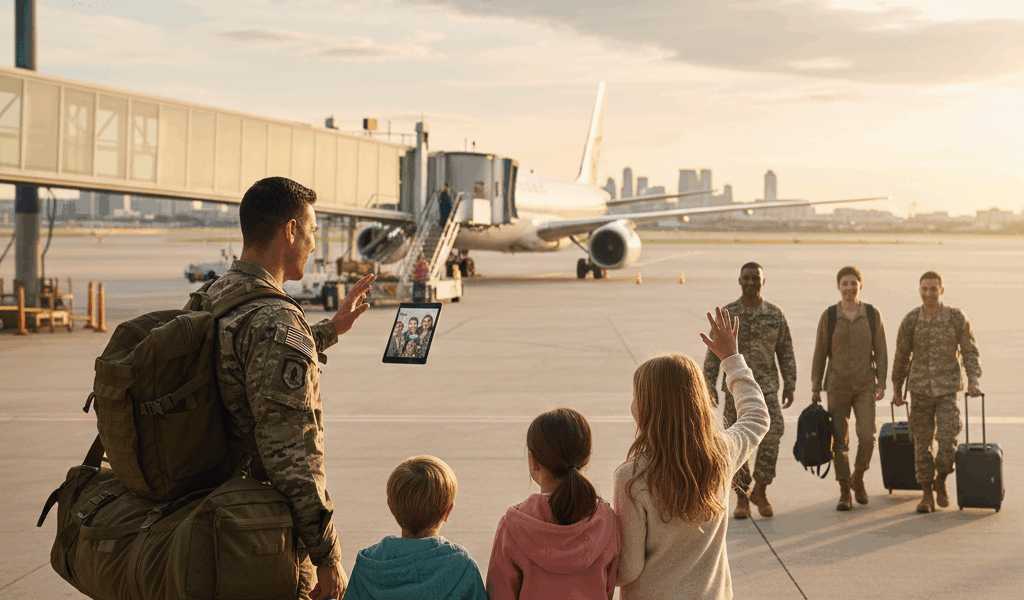
Technology enables constant connection but requires intentional use. Schedule regular video calls at consistent times that work across time zones. Brief daily check-ins matter more than occasional marathon conversations. Consistency builds trust and maintains emotional bonds.
Share your life in your temporary location. Send photos of your workspace, local restaurants, weekend activities. When family understands your environment, conversations flow more naturally. They can picture you in context rather than imagining vague loneliness.
Probably should have led with this section, honestly. Be present during calls. Step away from distractions. Put down your phone and engage fully with the faces on your screen. Quality attention during limited time matters more than quantity of distracted minutes.
Communicate about challenges honestly but constructively. Both partners face difficulties during separation. Sharing struggles builds connection, but constant complaining breeds resentment. Find balance between authenticity and burden-sharing.
Building Local Community
Isolation accelerates homesickness and damages mental health. Force yourself to build connections in your temporary location. Other TDY travelers face identical challenges and often welcome friendship.
Join base fitness classes, recreational programs, or hobby groups. Attend chapel services if faith is important to you. Volunteer with local organizations. These activities provide structure, purpose, and human connection.
Explore your temporary location like a tourist. Visit local attractions, try regional restaurants, learn the area’s history. Treating TDY as an adventure rather than exile transforms the experience psychologically.

Maintaining Physical and Mental Health
Exercise consistently throughout your TDY. Physical activity combats depression, manages stress, and improves sleep. Most hotels have fitness facilities. Base gyms provide equipment and community. Even simple walking routines help.
Watch your nutrition carefully. Extended hotel living encourages restaurant meals and convenience food. These patterns erode health over time. Cook simple meals when possible. Choose restaurants with healthy options. Avoid the trap of comfort eating to cope with loneliness.
Limit alcohol consumption. Drinking alone in hotel rooms becomes problematic quickly during extended separation. I’ve watched good people go down this road. Set limits before departure and stick to them.
Monitor your mental health honestly. Persistent sadness, anxiety, or difficulty functioning warrant professional attention. Military OneSource provides free counseling. Chaplains offer confidential support. Seeking help demonstrates strength, not weakness.
Supporting Your Partner and Children From Afar
Your absence creates challenges for those at home. Acknowledge their struggles without minimizing your own. Express appreciation for their management of household responsibilities. Avoid criticism about how they handle situations differently than you would.
Stay involved with children’s lives. Attend events virtually when possible. Help with homework over video calls. Read bedtime stories remotely. These connections maintain your parental role despite physical distance.
Plan special moments within the separation. Send unexpected gifts or letters. Schedule surprise food deliveries. Mark milestones even from far away. These gestures remind family they remain your priority.
The Return Transition
Coming home after extended absence requires adjustment. Relationships shifted during your absence. Routines changed. Reintegration takes time and patience from everyone.
Avoid immediately resuming all previous responsibilities and authorities. Give yourself and your family time to readjust. Listen more than direct during the first weeks home.
Extended TDY ends. The separation that seemed endless eventually concludes. Maintaining perspective, nurturing relationships, and caring for yourself ensures you return home healthy, connected, and ready to resume normal life.




Leave a Reply