Rental Car Damage on TDY — Who Pays and What to Do
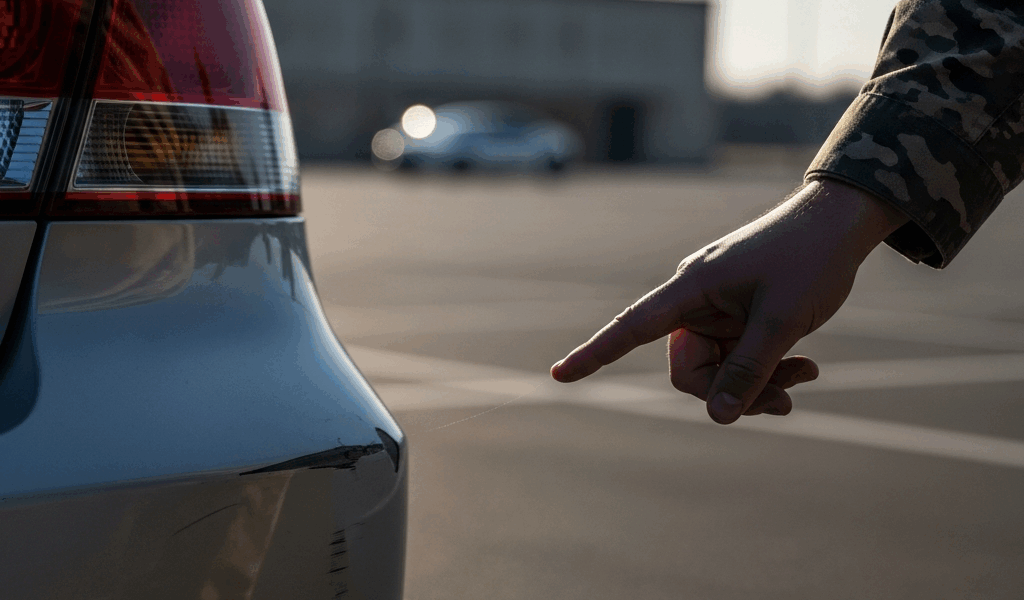
TDY travel has gotten complicated with all the misinformation flying around about rental cars, damage coverage, and who actually foots the bill when something goes wrong. As someone who clipped a concrete parking barrier at a San Antonio hotel in 2019 — slow-speed, humiliating, very expensive scrape along the rear quarter panel of a government-booked Chevy Malibu — I learned everything there is to know about this subject the hard way. Standing in that parking lot at 11 PM, I had absolutely no idea who to call, whether I owed money personally, or whether my government card did anything useful. Turns out it didn’t. Three phone calls and one JAG memo later, I had my answer. This is what I wish someone had handed me before I ever got behind the wheel on official orders.
Government-Authorized Rental — Government Pays
Here’s the thing that would have saved me significant stress going in. When you book through the Defense Travel System at a government contract rate — Enterprise, Hertz, National, under GSA-negotiated terms — the federal government self-insures that vehicle. No collision damage waiver needed. No supplemental liability protection. Decline both. Every single time, without hesitation.
But what is self-insurance, exactly? In essence, it’s a policy-level decision by the government to absorb repair costs directly rather than pay premiums to a third-party insurer. But it’s much more than that — it’s baked into the actual contract terms negotiated between GSA and the rental companies. There’s no insurance card. No policy number to recite at the counter. The coverage exists because federal law and contract language say it does. Claims go through your unit, not through any insurer.
That’s what makes this system endearing to us government travelers — once you actually understand it, it’s genuinely simple. The problem is the rental counter agent who will absolutely try to sell you the damage waiver anyway. They’re trained to. Some will strongly imply that government coverage “doesn’t really hold up” or that you’ll personally owe if anything happens. That’s not accurate. The GSA contract rate specifically includes self-insurance. Decline the optional coverage, photograph the car before you leave the lot, and document any pre-existing scratches with the agent standing right there.
One more thing — this self-insurance covers the vehicle class DTS actually authorized. Upgrade yourself at the counter, pay the difference on your personal card, and you’re in genuinely murky territory. Your authorization is in your travel orders. Read them before you touch the car.
Report Immediately — Timeline Matters
The natural instinct after finding fresh damage is to assess how bad it looks before telling anyone. Don’t make my mistake. That instinct costs people real money. The reporting window isn’t a suggestion, and missing it transforms a covered incident into personal liability faster than feels fair.
Here’s the sequence, in order:
- Report to the rental company at the scene. Before you move anything, before any other calls. Get an incident report number from them. If another vehicle was involved, collect their information. Photograph everything — the damage, the surrounding area, the other plate if there is one. Your phone’s timestamp becomes evidence later.
- File a police report if the situation requires it. State laws vary. Another party involved, damage above roughly $500 to $1,000, or a rental company request — any of those typically means you need a report. Call the non-emergency line and ask. Don’t guess on this one.
- Notify your Authorizing Official within 24 hours. Hard deadline. Your AO needs to know what happened, when, and what the rental company documented. Put it in writing — email with read receipt. Verbal doesn’t count. You want a paper trail.
That 24-hour window exists so the government can actually process the claim and so you don’t end up personally fingered for a repair later. Miss it and your AO may not be able to certify the incident happened during official duty. At that point, the rental company comes after you directly — and you fight that alone.
Also: don’t negotiate with the rental company yourself about repair costs. Don’t offer anything out of pocket to “make it disappear.” Once you do that, the government claim process gets messy, and you may lose coverage you were fully entitled to. Document, report, then step back and let the process run.
The GTCC Does Not Cover Damage
Probably should have opened with this section, honestly, given how many people I’ve met who assumed otherwise.
The Government Travel Charge Card — the GTCC, the blue card, the one covering hotel rooms and airport parking and everything in between — provides exactly zero vehicle damage coverage. It’s a payment method. A billing tool. Using it to rent the car doesn’t extend any protection to the vehicle itself.
This trips people up constantly, and it’s understandable. Personal cards like Chase Sapphire, Amex Gold, and various Visa Signature products offer rental collision coverage as a built-in benefit. Frequent personal travelers know this — they carry that assumption straight into TDY and expect the GTCC to work identically.
It doesn’t. The GTCC is issued by Citibank under a government contract, and those terms explicitly exclude rental vehicle damage coverage. Nothing to activate. No claim to file with Citibank. If you’re treating the GTCC as your damage safety net, you have no safety net.
The real protection — as laid out above — is the government’s self-insurance on DTS-booked rentals. The card pays the bill. The self-insurance handles the damage. Two entirely separate things. Confusing them creates genuine problems the moment something goes wrong.
Personal Rental vs. Government Rental
Rental car coverage has gotten complicated depending on how you actually booked the car. This is also where travelers quietly expose themselves to serious personal financial risk without realizing it.
Book outside of DTS — maybe the system was down, maybe you found a better rate, maybe you were moving fast — and the government’s self-insurance does not apply. Full stop. You rented it personally. You’re on the hook personally. Being on TDY orders at the time doesn’t change the vehicle’s coverage status one bit.
In that case, you’re looking at two potential options:
- Your personal auto insurance. Most personal policies extend collision and liability coverage to rental vehicles — for personal use. That phrase matters. Using a rental for official government travel may fall into a gray zone depending on your policy language. Call your insurer before assuming. My USAA policy covers TDY rentals — I confirmed that explicitly — but not every policy does.
- Personal credit card benefits. If you paid with a personal card that offers rental collision coverage, that benefit may apply. Read the fine print carefully. Most require you to decline the rental company’s collision waiver. Most also exclude certain vehicle types and cap the rental period at a set number of days.
There’s another scenario worth knowing — you’re authorized a rental through DTS, you upgrade at the counter, and the upgrade charge lands on your personal card. Now part of the rental sits under a government contract and part sits under personal payment. The coverage picture there is genuinely unclear. Run it by your JAG office before assuming anything is covered. The cleaner move is to rent exactly what DTS authorized and skip the improvisation entirely.
Filing the Claim Through Your Unit
Assuming you did everything right — DTS booking, government contract rate, immediate reporting — here’s how the claim actually moves through the system.
The primary document is the SF-91, the standard Motor Vehicle Accident Report. You complete it and submit through your chain of command. It captures the incident details, parties involved, location, circumstances, and damage. Fill it out accurately — vague answers slow things down and sometimes raise questions you don’t want raised.
Your unit’s JAG office takes it from there. They coordinate with the agency and the rental company to assess damage, determine government liability, and arrange repair payment. Resolution typically runs 30 to 90 days — not fast, but that’s the reality. You shouldn’t be receiving collection calls or personal invoices from the rental company during that window. If you are, get JAG involved immediately.
Personal liability only enters the picture under specific conditions. Driving under the influence, operating the vehicle outside your TDY scope, clear recklessness — the government can pursue cost recovery in those situations. A standard accident while conducting official business, in a properly authorized vehicle, following the rules? Not your bill.
A few things that genuinely move the process faster:
- Timestamped photos from the scene
- The rental company’s incident report number — in writing
- A police report number if one was filed
- Written notification to your AO inside that 24-hour window
- A completed SF-91 submitted promptly — don’t sit on it
After my San Antonio situation, I turned in original documents, scanned nothing, and spent three weeks reconstructing a timeline from scattered emails when JAG needed a follow-up. Frustrating doesn’t cover it. Keep copies of everything you submit. Save every email. If you handed something over in person, send a written summary to your AO confirming exactly what you gave them.
The system genuinely works when you work it correctly — authorized rental, official duty, fast reporting, clean documentation. The government covers it. Your only job is to avoid handing anyone a reason to argue you fell outside those parameters. Book through DTS, report fast, keep your paperwork, and let JAG do what they do.


Leave a Reply